

Noisy garage doors are typically caused by loose hardware, dry rollers, or worn springs. GOGO Garage Door Service identifies these issues quickly to restore quiet operation. Most homeowners can reduce noise by tightening bolts and lubricating moving parts, but persistent grinding or squeaking often requires professional intervention to prevent further damage. For additional details, review the Just a moment.
The Impact of Vibration on Hardware
Garage doors operate under significant mechanical stress. Every time the door opens and closes, the system vibrates. This constant movement causes bolts, brackets, and track screws to loosen over time. When these components shift, they create friction and rattling sounds. A loose track bracket is a common source of loud banging noises during operation. For additional details, review the Just a moment.
Loose hardware is a primary cause of operational noise. The vibration from the opener motor travels through the door panels and into the mounting points. If the track is not securely fastened to the wall studs, it will rattle. This rattle can escalate into a loud banging sound that disturbs the household. Tightening these connections is often the first step in silencing a noisy door. For additional details, review the Just a moment.
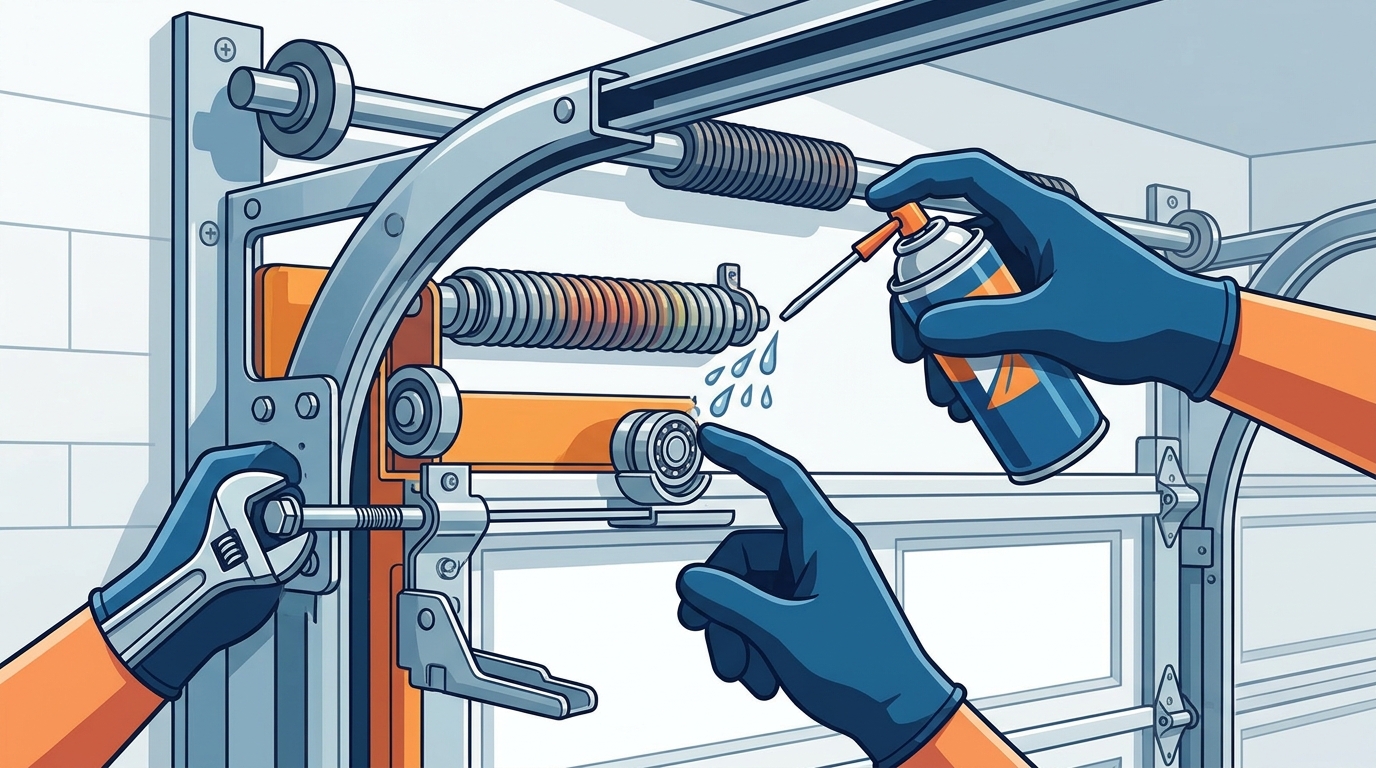
Homeowners can address this by inspecting the track bolts. You should check the bolts that secure the track to the wall and the ceiling. If you find any that are loose, tighten them with a wrench. However, be careful not to overtighten, as this can warp the track. If the track is bent or misaligned, tightening will not solve the problem. In such cases, professional realignment is necessary.
Roller Wear and Friction
Rollers are the small wheels that guide the door along the tracks. Over time, these rollers wear down or become dry. When rollers are not lubricated, they create a high-pitched squeaking or grinding sound. Nylon rollers are generally quieter than steel rollers, but both require maintenance. A dry roller is a leading cause of squeaking noises.
The type of roller installed on your door matters significantly. Steel rollers are durable but can be noisy if not properly maintained. Nylon rollers are designed to operate more quietly but can wear out faster. If your door has steel rollers and you hear grinding, the rollers may be worn down to the metal core. Replacing these rollers with nylon ones can significantly reduce noise levels.
Lubrication is a simple fix for dry rollers. You can use a silicone-based lubricant or a garage door-specific lubricant. Apply the lubricant to the rollers and the tracks. Avoid using grease or WD-40, as these can attract dust and debris. Dust buildup increases friction and leads to more noise. Regular lubrication every six months helps maintain quiet operation.
Spring Tension and Balance
Garage door springs are under extreme tension. They counterbalance the weight of the door to make it easy to lift. When springs are worn or unbalanced, they can create loud popping or snapping sounds. A broken spring is a critical safety hazard and requires immediate professional repair. The tension in the spring system is a major factor in door noise.
There are two main types of springs: torsion springs and extension springs. Torsion springs are located above the door and twist to lift the door. Extension springs are located on the sides and stretch to lift the door. Both types can become noisy as they age. A worn spring may make a creaking sound as it stretches or twists. This noise is a warning sign that the spring is nearing the end of its life.
Do not attempt to repair or adjust garage door springs yourself. The tension stored in these springs is dangerous and can cause serious injury. If you hear a loud bang or pop, the spring may have broken. In this case, the door will be heavy and difficult to lift. Contact a professional technician to replace the springs safely. GOGO Garage Door Service handles spring replacements with proper safety protocols to ensure your family is protected.
Opener Motor and Gear Wear
The garage door opener is the motorized unit that drives the door. Over time, the internal gears and motor components wear down. This wear can result in loud humming, clicking, or grinding noises. A worn gear set is a common cause of noisy openers. The motor works harder to move the door, creating more noise.
Chain drive openers are generally louder than belt drive openers. Chain drives use a metal chain to move the door, which can rattle if not properly tensioned. Belt drives use a rubber belt, which operates more quietly. If you have a chain drive opener and it is becoming noisy, check the chain tension. The chain should have about half an inch of slack. If it is too tight, it will strain the motor and create noise.
Opener maintenance involves lubricating the chain or belt and checking the gear mesh. You can apply a small amount of lubricant to the chain. For belt drives, ensure the belt is not frayed or cracked. If the opener is making a loud grinding noise, the gears may be stripped. In this case, the gear set needs to be replaced. This is a common repair for older openers. Replacing the gear set can restore quiet operation without replacing the entire unit.
Panel Alignment and Track Condition
Garage door panels are large sections of metal or wood that make up the door. If the panels are not aligned properly, they can rub against each other or the tracks. This rubbing creates a scraping or screeching sound. Misaligned panels are often caused by a bent track or a damaged panel. The condition of the panels affects the overall noise level of the door.
Track alignment is crucial for smooth operation. If the track is bent or dented, the rollers will not move smoothly. This causes the door to bind and create noise. You can check the track for any visible dents or bends. If you find a bent section, it may need to be straightened or replaced. A professional technician can assess the track condition and make necessary adjustments.
Panel damage can also contribute to noise. If a panel is dented or warped, it may not sit flush with the other panels. This misalignment can cause the door to rub against the frame or the tracks. Replacing a damaged panel is a more complex repair that requires professional expertise. It ensures that the door operates smoothly and quietly. Regular inspections can help identify panel issues before they become major problems.
Key Takeaways
- Loose hardware is a common cause of rattling and banging noises.
- Dry or worn rollers create squeaking and grinding sounds.
- Worn springs can produce loud popping or snapping noises.
- Opener gear wear results in humming or clicking sounds.
- Misaligned panels or tracks cause scraping and screeching.
- Regular lubrication and inspection reduce noise and extend door life.
- Professional repair is necessary for spring and track issues.
Frequently Asked Questions
Why is my garage door making a loud banging noise?
A loud banging noise is often caused by loose track brackets or a broken spring. Check the track bolts for tightness. If the noise persists, a spring may have broken, requiring professional repair.
How often should I lubricate my garage door?
You should lubricate the rollers, hinges, and springs every six months. Use a silicone-based lubricant or a garage door-specific product. Avoid grease or WD-40, as they attract dust.
Can I fix a noisy garage door opener myself?
You can lubricate the chain or belt and check the gear mesh. However, if the gears are stripped or the motor is failing, you should contact a professional. Opener repairs can be complex and require specific tools.
Are nylon rollers quieter than steel rollers?
Yes, nylon rollers are generally quieter than steel rollers. They are designed to operate with less friction. If you have steel rollers and want a quieter door, consider replacing them with nylon rollers.
What should I do if I hear a loud pop from my garage door?
A loud pop usually indicates a broken spring. Stop using the door immediately. A broken spring is dangerous and can cause the door to fall. Contact a professional technician to replace the spring safely.
How do I know if my track is bent?
Look for visible dents or bends in the track. You can also check if the rollers are moving smoothly. If the door binds or makes a scraping noise, the track may be bent. A professional can assess and straighten the track.
Restoring Quiet Operation
Noisy garage doors are a common issue, but they are often easy to fix. By addressing loose hardware, lubricating rollers, and maintaining your opener, you can significantly reduce noise levels. For more complex issues like broken springs or bent tracks, professional service is essential. GOGO Garage Door Service provides expert repair and maintenance for residential and commercial doors across Maricopa and Pinal Counties. To schedule an inspection or repair, request a free estimate today.