
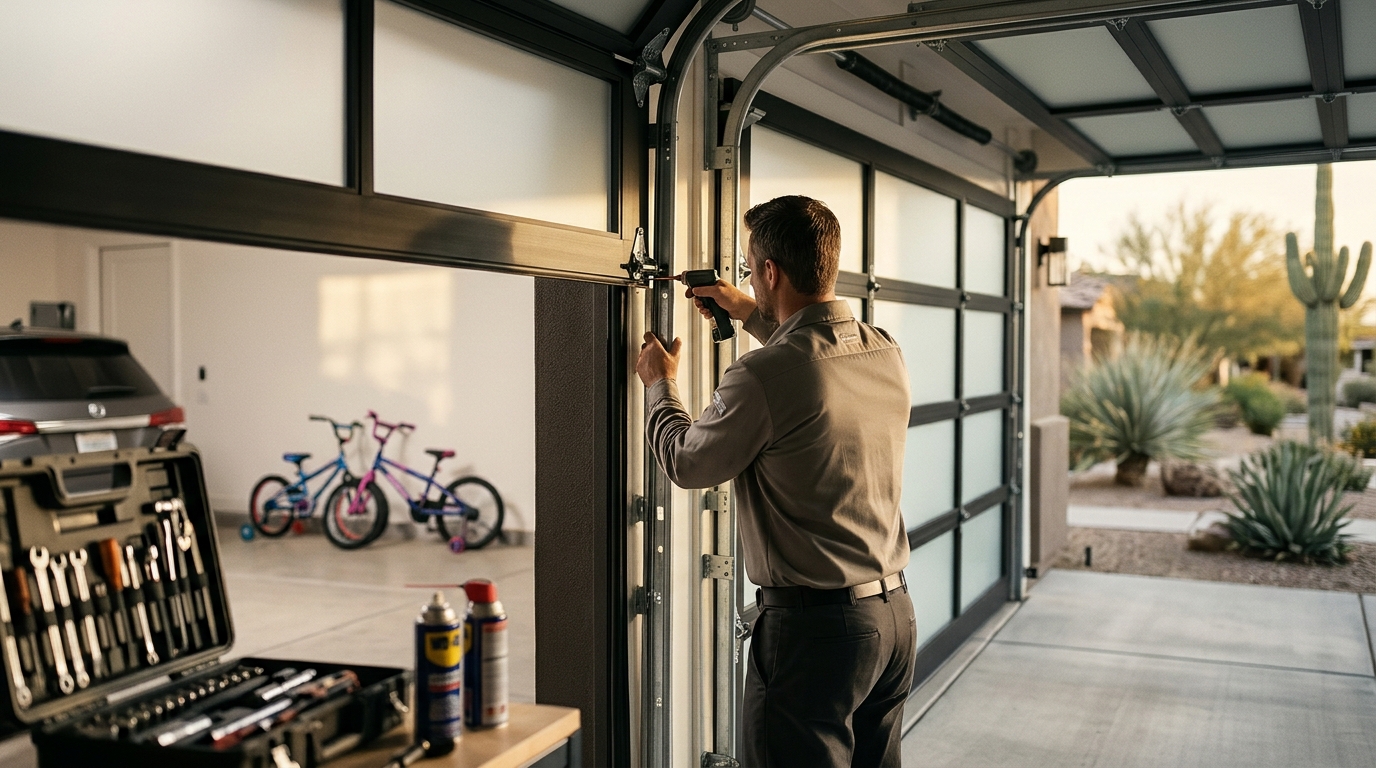
Homeowners in the Phoenix Valley should schedule a professional garage door maintenance visit every six months. This frequency is critical because the extreme desert heat and airborne dust accelerate wear on moving parts. By adhering to this schedule, you prevent minor friction issues from escalating into catastrophic mechanical failures that require costly emergency repairs.
Why Arizona Weather Matters
Garage door maintenance is the process of inspecting, lubricating, and adjusting mechanical components to ensure safe operation. In the Phoenix metro area, this task is not optional. The local climate creates a hostile environment for metal hardware. High temperatures cause lubricants to dry out faster, while monsoon dust settles into tracks and gears. This combination creates friction that standard residential environments do not face.
When dust accumulates in the track system, it acts as an abrasive. It grinds against the rollers and the steel rails. Over time, this friction wears down the protective coating on the metal. The result is increased noise and slower movement. If you ignore these early signs, the stress transfers to the motor and the springs. This is why a local expert like GOGO Garage Door Service emphasizes preventative care for Valley residents.
The Six-Month Standard
Most manufacturers recommend a professional tune-up once a year. However, for homes in Maricopa and Pinal counties, a six-month interval is the safer standard. This frequency allows a technician to catch wear before it becomes a safety hazard. It also ensures that the lubrication remains effective throughout the hot summer months.
During a professional visit, the technician checks the tension on the springs. They also inspect the cables for fraying. A frayed cable is a critical failure point. If it snaps, the door can crash down. This type of damage often requires a full garage door replacement rather than a simple fix. By servicing the door every six months, you protect your investment and your family's safety.
Spring and Cable Inspection
Garage door springs are the most common point of failure in the system. They are under high tension and are rated for a specific number of cycles. In a busy household, the door may open and close multiple times a day. This constant use weakens the metal. Eventually, the spring loses its ability to counterbalance the weight of the door.
A broken spring is dangerous. It can release with a loud bang and send metal shards flying. You should never attempt to repair a torsion spring yourself. The tension stored in the spring is lethal. A professional technician has the specialized tools to handle this safely. If you hear a loud noise or notice the door is heavy, call for garage door spring repair immediately. Do not wait for the other spring to break.
Opener and Sensor Tuning
The garage door opener is the brain of the system. It controls the speed and the safety features. Over time, the gears inside the motor can wear down. This causes the opener to become slow or inconsistent. You might notice that the remote takes longer to respond. Or the door might stop halfway and reverse. These are signs that the opener needs attention.
Safety sensors are also critical. They are located near the floor on both sides of the door. If they are misaligned, the door will not close. This is a safety feature designed to prevent the door from closing on a person or pet. Dust can obscure the sensor lenses. A simple cleaning and realignment can fix this issue. Regular maintenance ensures that these electronic components function correctly. It also prevents the motor from burning out due to strain.

Signs of Failure
Even with regular maintenance, you should watch for warning signs. These signs indicate that a component is failing. Ignoring them can lead to a complete system breakdown. Here are the most common indicators that your door needs immediate attention:
- Loud grinding or squeaking noises during operation.
- The door moves slowly or jerks unevenly.
- The door does not open or close fully.
- The remote or wall switch does not respond.
- Visible damage to cables, rollers, or panels.
If you notice any of these signs, do not force the door to operate. Forcing a stuck door can damage the tracks and the motor. It can also create a safety hazard. Instead, contact a professional for an assessment. GOGO Garage Door Service offers same-day repairs for many of these issues. Fast response times are essential in the Phoenix heat, where a broken door can let in extreme temperatures and dust.
Key Takeaways
- Schedule a professional garage door maintenance visit every six months in Phoenix.
- Arizona heat and dust accelerate wear on springs, cables, and rollers.
- Never attempt to repair a broken torsion spring yourself due to high tension.
- Check safety sensors regularly to ensure they are clean and aligned.
- Listen for unusual noises that indicate friction or mechanical failure.
- Use a licensed and insured local provider for all repairs and installations.
Frequently Asked Questions
How often should I lubricate my garage door?
You should lubricate the moving parts of your garage door every six months. Use a silicone-based lubricant designed for garage doors. Avoid using WD-40 as a long-term lubricant, as it can attract dust and dry out quickly.
Can I fix a broken garage door spring myself?
No, you should not fix a broken garage door spring yourself. The springs are under extreme tension and can cause serious injury if they release unexpectedly. Always hire a professional technician for spring replacement.
What is the lifespan of a garage door opener?
A typical garage door opener lasts between 10 and 15 years. However, this depends on usage and maintenance. If your opener is older than 10 years and starting to make noise, it may be time for an upgrade.
Why is my garage door making a grinding noise?
A grinding noise usually indicates that the rollers or hinges are worn out. It can also mean that the tracks are misaligned. A professional inspection can identify the source of the noise and fix it before it causes further damage.
Do I need to service my garage door in the winter?
Yes, you should service your garage door in the winter as well. While Phoenix winters are mild, the temperature drop can affect the lubricants and the metal components. A six-month schedule ensures your door is ready for both seasons.
Conclusion
Regular maintenance is the most effective way to avoid expensive garage door repairs. By scheduling a professional visit every six months, you protect your home and your family. The Phoenix climate demands a higher standard of care for these mechanical systems. Do not wait for a breakdown to act. Contact GOGO Garage Door Service today to schedule your next maintenance visit and keep your door running smoothly for years to come.