
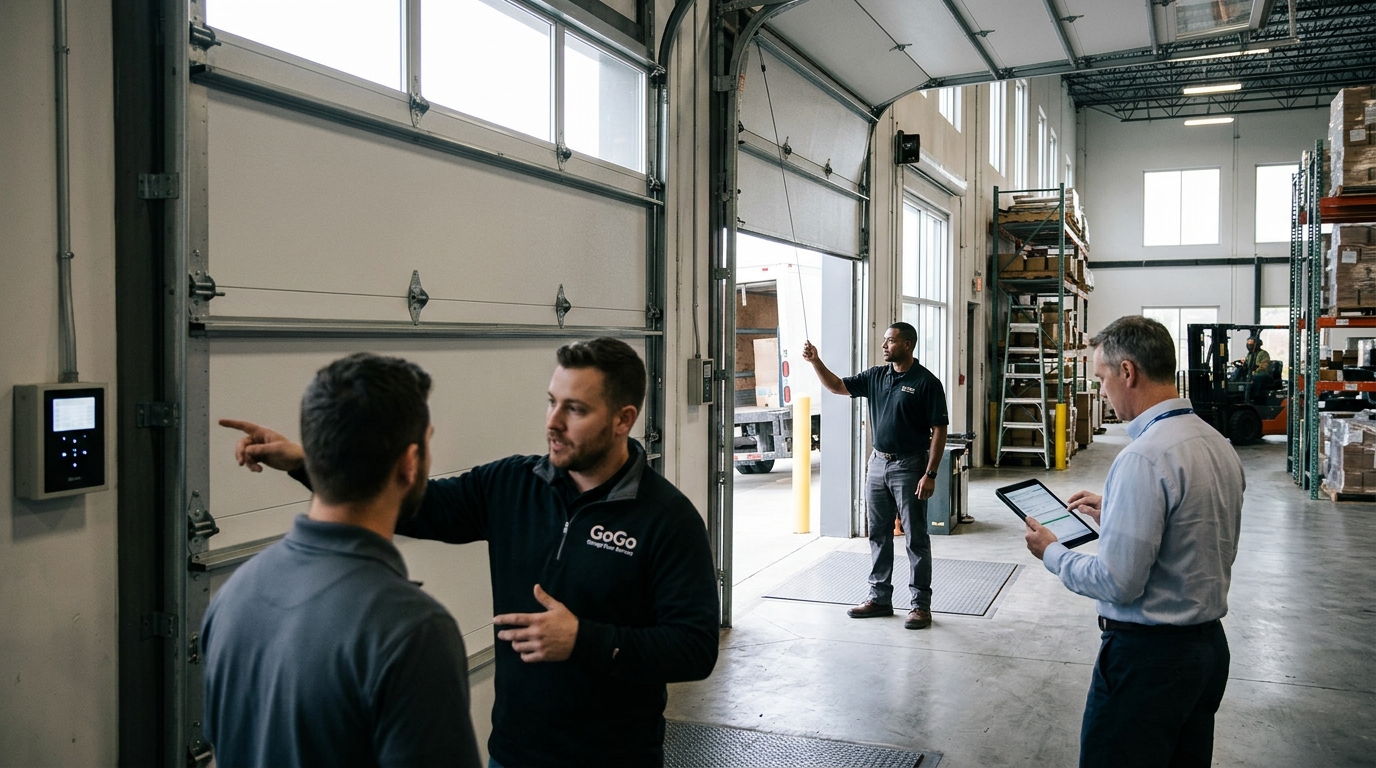
1. High-Grade Steel Construction
Heavy-gauge steel panels provide the structural integrity needed for high-traffic commercial environments. Commercial doors face constant stress from wind, temperature fluctuations, and frequent use. Standard residential-grade materials often fail under these conditions, leading to costly repairs. Look for doors constructed with 24-gauge or heavier steel to ensure the panels resist denting and warping over time. For additional details, review the Just a moment.
2. Integrated Safety Sensors
3. Durable Weather Sealing
4. Robust Spring and Cable Systems
Heavy-duty torsion springs and reinforced cables ensure smooth, balanced door operation. Commercial doors are significantly heavier than residential units, requiring specialized spring systems to counterbalance the weight. A properly engineered spring system reduces the strain on the opener motor and extends the overall lifespan of the door. Regular inspection of these components is vital to prevent sudden failures that can trap the door in an open or closed position. For additional details, review the Just a moment.
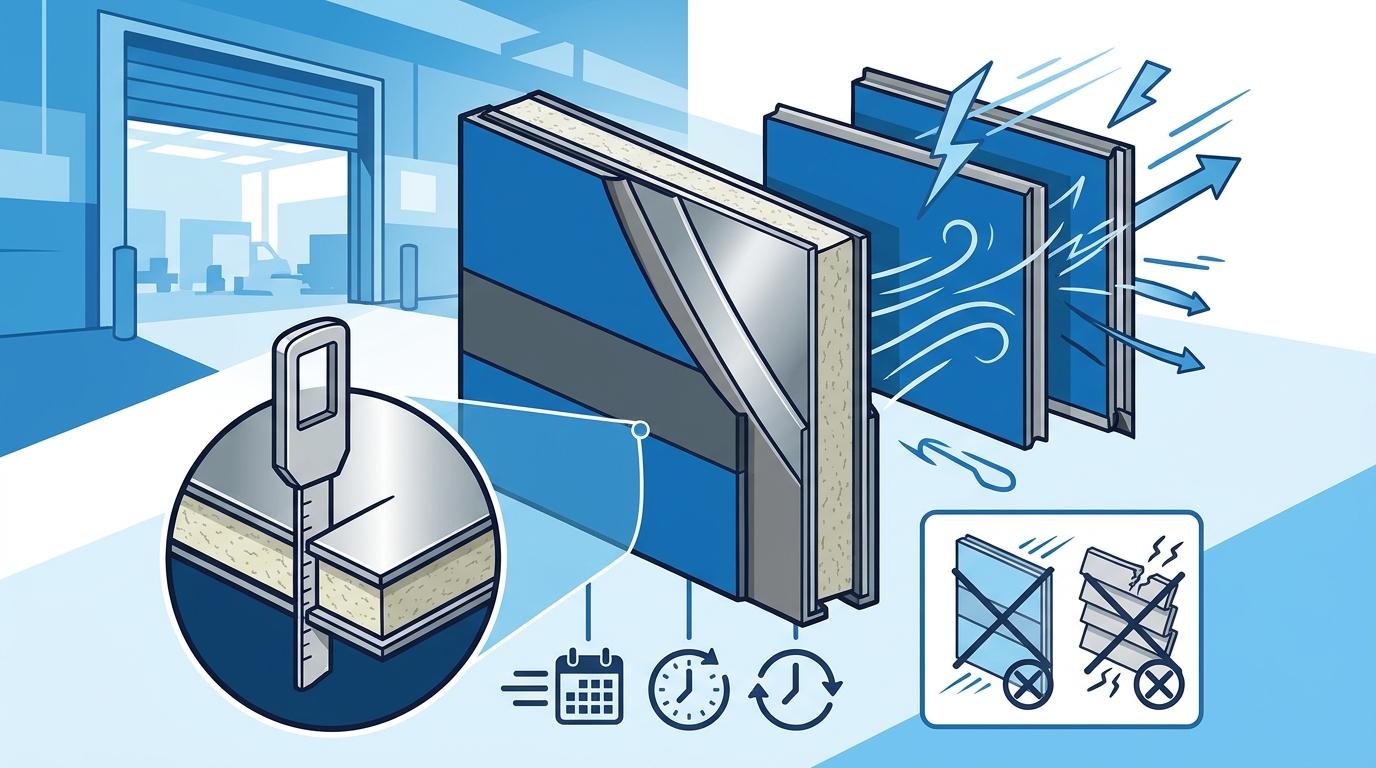
5. Commercial-Grade Opener Motors
6. Manual Override Mechanisms
7. Impact-Resistant Hardware
Reinforced hinges, rollers, and tracks withstand the physical demands of commercial traffic. Standard hardware can wear out quickly when subjected to the weight and frequency of commercial door cycles. Impact-resistant hardware ensures that the door remains aligned and operates smoothly over thousands of cycles. Investing in durable track systems and heavy-duty rollers minimizes the need for frequent maintenance and alignment adjustments. For additional details, review the Just a moment.
Choosing the Right System for Your Business
Frequently Asked Questions
What is the most common failure point in commercial overhead doors?
The spring system is the most common failure point due to the high tension required to balance heavy commercial doors. Regular professional inspection can identify wear before a complete failure occurs.
How often should commercial door springs be replaced?
Commercial springs typically last between 10,000 and 15,000 cycles, depending on usage frequency. Monitoring cycle counts and inspecting for signs of fatigue is more reliable than relying on a fixed time interval.
Do commercial doors require different openers than residential doors?
Yes, commercial doors require openers with higher torque ratings and reinforced cooling systems. Residential openers are not designed to handle the weight and cycle frequency of commercial units.
What safety features are mandatory for commercial overhead doors?
Photoelectric safety sensors and manual override mechanisms are critical safety features. These components help prevent injury and ensure access during power outages.
Can I use residential-grade hardware on a commercial door?
No, residential-grade hardware is not suitable for commercial applications. It lacks the durability to withstand the stress of frequent commercial use and will fail prematurely.
How does weather sealing affect energy costs?
Effective weather sealing reduces air leakage, which lowers the workload on HVAC systems. This results in lower energy bills and a more consistent indoor environment.